




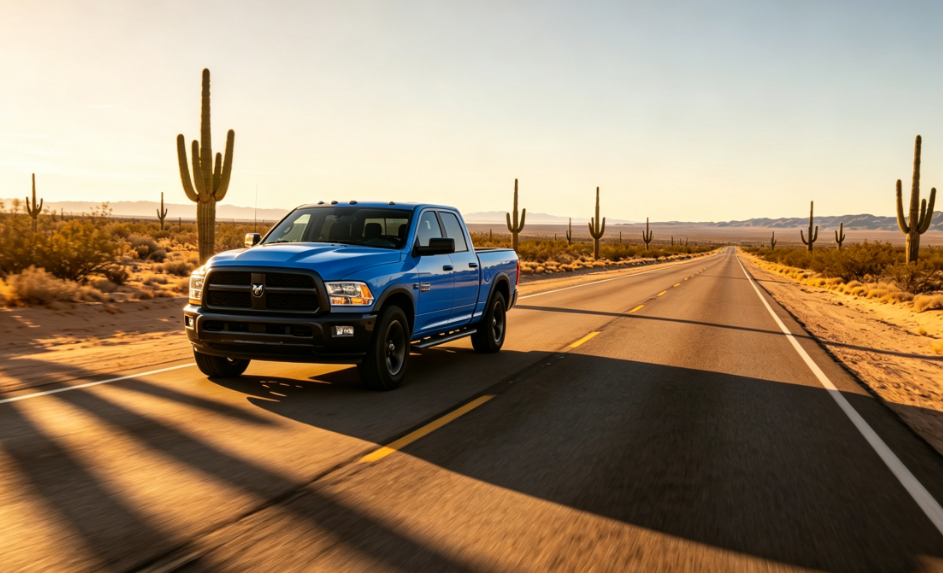
Howdy, folks. If you’re anything like me, your truck isn’t just some shiny pavement princess—it’s the backbone of your farm. Out here, my Ford 6.7L Powerstroke spends its days pulling heavy cattle trailers, hauling feed, and kicking up dust on dirt roads. Recently, a buddy down at the co-op asked me a question that’s been floating around the diesel community a lot lately: “Since Ford got rid of that notorious CP4 pump, do the 2020 and newer 6.7L Powerstrokes still need a disaster prevention kit?”
It’s a fair question. The internet will give you a hundred different answers, mostly from guys who don’t rely on their trucks to put food on the table. So, let’s talk about it farmer-to-farmer, looking at what’s actually happening out here in the dirt and what the current 2026 market numbers are telling us.
What Actually Changed in 2020?
First off, let’s give credit where it’s due. On the 2020 and newer models, Ford finally ditched the Bosch CP4 high-pressure fuel pump and swapped it for the Denso HP4.
If you owned a 2011-2019 Powerstroke, you already know the CP4 was a ticking time bomb. If it failed, it sent metal shrapnel through the entire fuel system. The HP4 on our newer trucks is a beefier, much more reliable pump. It doesn’t have that same catastrophic design flaw. So, does that mean we’re completely out of the woods?
Not by a long shot.
The 2026 Reality Check: Why a Better Pump Isn’t Magic
Here is the cold, hard truth based on the latest market data. Yes, the Denso HP4 is better, but it is still a highly sensitive mechanical part pumping fuel at extreme pressures. And guess what? It still hates bad fuel.

Out here in the country, we aren’t always filling up at premium city gas stations. We’re dealing with farm diesel, rural storage tanks that might have condensation, and the occasional water contamination. Water, dirt, or even an accidental splash of gasoline will destroy an HP4 just like any other pump.
When an HP4 fails from bad fuel or long-term wear and tear, it can still send metal debris straight into your expensive injectors. And this is where the math gets absolutely terrifying.
Right now, as we roll through 2026, inflation and ongoing parts shortages have driven diesel repair costs through the barn roof. Replacing an entire contaminated fuel system on a 6.7L Powerstroke—pump, injectors, lines, and tank flush—will easily run you $12,000 to $15,000. Plus, heavy-duty diesel shop labor rates are touching $180 to $200 an hour in many areas, and waiting on backordered parts can leave your truck dead in the shop for weeks. As farmers, we can’t afford that kind of downtime. A broken truck means the work stops, and when the work stops, we lose money.
What Does a Disaster Prevention Kit Actually Do for the HP4?
Some folks think putting a disaster kit on an HP4 means you don’t trust the pump. That’s hogwash. It’s not about fixing a broken pump design; it’s about buying cheap crop insurance for your injectors.
If the high-pressure pump fails, the disaster prevention kit reroutes that fuel—and all those nasty metal shavings—back to the tank and through your fuel filters, instead of letting it reach the engine block.
Instead of a $15,000 bill to replace the whole system, you’re only replacing the pump and flushing the tank. It turns a financial disaster into a manageable inconvenience.
Who Really Needs One?
I’ll shoot straight with you. If you just drive your truck to church on Sundays, never haul more than a bag of mulch, and trade it in before the warranty expires, you probably don’t need to mess with this.
But you should seriously consider installing a disaster prevention kit if you:
- Tow heavy: Hauling livestock, heavy farm equipment, or big goosenecks puts maximum strain on your engine.
- Keep your trucks for the long haul: If you plan on running your rig well past 100,000 miles, this is a no-brainer.
- Fill up at rural spots: Where fuel quality and water contamination are real, everyday risks.
- Can’t afford $15K in downtime: If you treat your truck as an investment and a vital farm tool, you need to protect it.
The Bottom Line
I don’t like spending my hard-earned money on my truck unless it makes sense. Upgraded filtration is a great first step, but a disaster kit is the ultimate safety net. The HP4 pump is tough, but modern diesel fuel contamination is an expensive reality we still face every single day.
For my money, dropping a few hundred bucks on a premium bypass kit to protect a $15,000 fuel system is the easiest math I’ll do all week. It gives me the peace of mind to hitch up the trailer, hit the fields, and get back to work without looking over my shoulder.